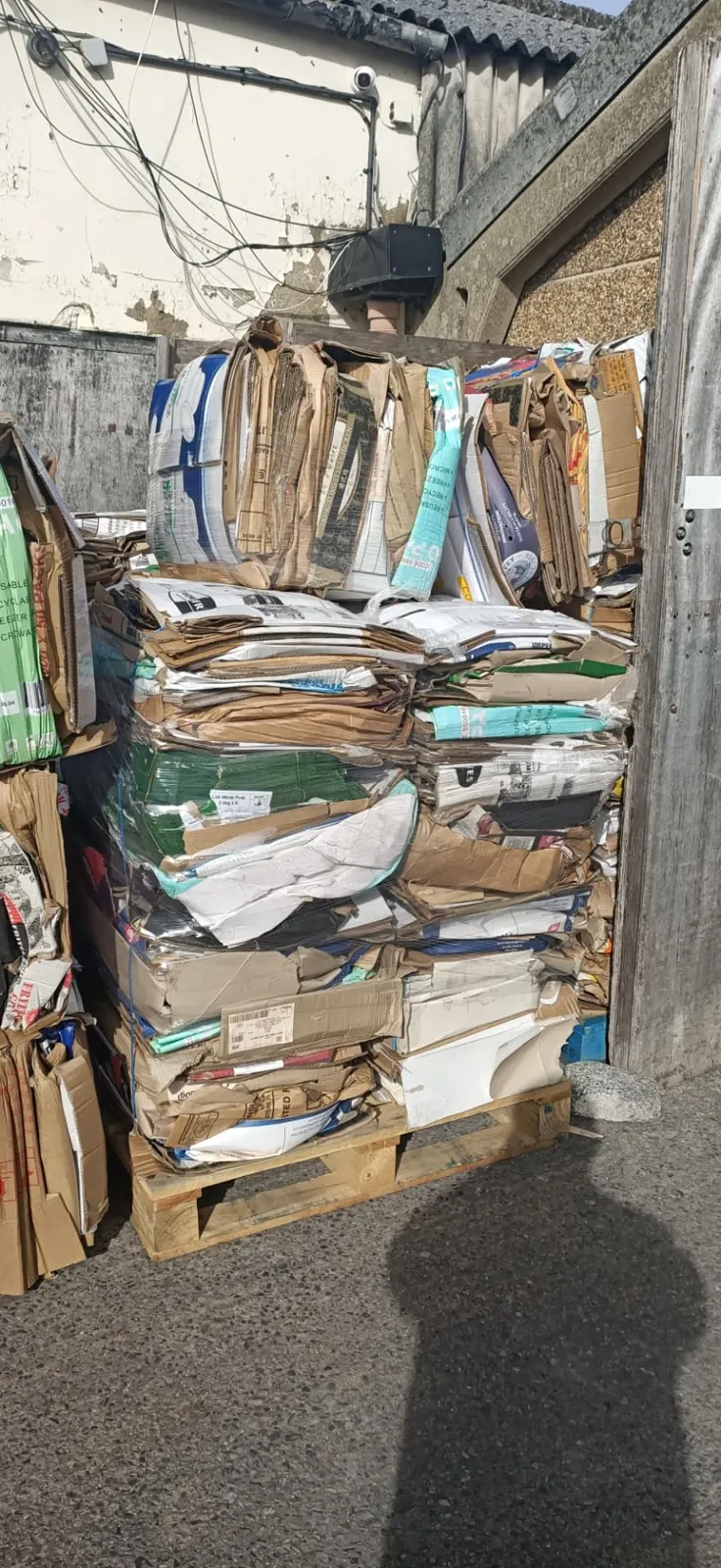
Cardboard is one of the most widely recovered materials in UK commercial waste streams. In 2024, UK paper and cardboard packaging reached an 84.1% achieved recycling rate, out of 4,838 thousand tonnes of paper and cardboard packaging waste arising that year (GOV.UK, UK statistics on waste). Here is what happens between a business putting out a bale and that material becoming new packaging.
Collection and Sorting
Used cardboard is collected from businesses and sorting or recycling depots, where it is separated from other recyclable materials such as plastics and metals. Contaminants like food residue, plastic film or other non-paper items are removed at this stage, because mixed-in materials can affect whether a load is accepted at a mill (Smurfit Westrock).
Cardboard that is already compressed into bales by the business that produced it is generally easier to handle at this stage than loose material, since it arrives in a known, stable unit.
Baling and Transport
Sorted cardboard is compressed into large bales for transport to a paper mill. DS Smith describes bales produced at its UK operations as weighing approximately 800kg, broadly comparable to a small car, though bale weight varies with the baling equipment and material used (DS Smith). Businesses that bale their own cardboard on smaller or medium equipment will typically produce lighter bales than this mill-scale example; see our guide to cardboard bale weight for more on this.
Pulping at the Mill
At the mill, bales are broken apart and mixed with water in a pulper, which separates the material back into individual fibres. This stage also removes remaining contaminants such as staples, plastic and ink (DS Smith).
Forming New Paper and Board
The cleaned pulp is then processed, dried and formed into new reels of paper or board, which are used to manufacture new boxes and packaging. Cardboard fibres can be recycled and reused multiple times through this loop before the fibres become too short to use again (Smurfit Westrock).
Why Condition and Sorting Matter
Because contamination has to be removed before pulping, the condition of cardboard when it is collected has a direct effect on how efficiently it can be recycled. Wet, heavily contaminated or poorly baled material may need individual assessment before it is accepted; see our guide on whether wet cardboard can be recycled for more detail.
Getting Your Bales Into This Process
If your business already produces baled cardboard, from small to mill-size, and wants it collected and recycled through this process, find out how our collection service works and request an individual quote. Every quote reflects your specific load, condition and location, with charges or a rebate confirmed before collection, as explained on our pricing page.
This article is for general information only and does not constitute professional or legal advice. For guidance on your specific waste, please contact our team.