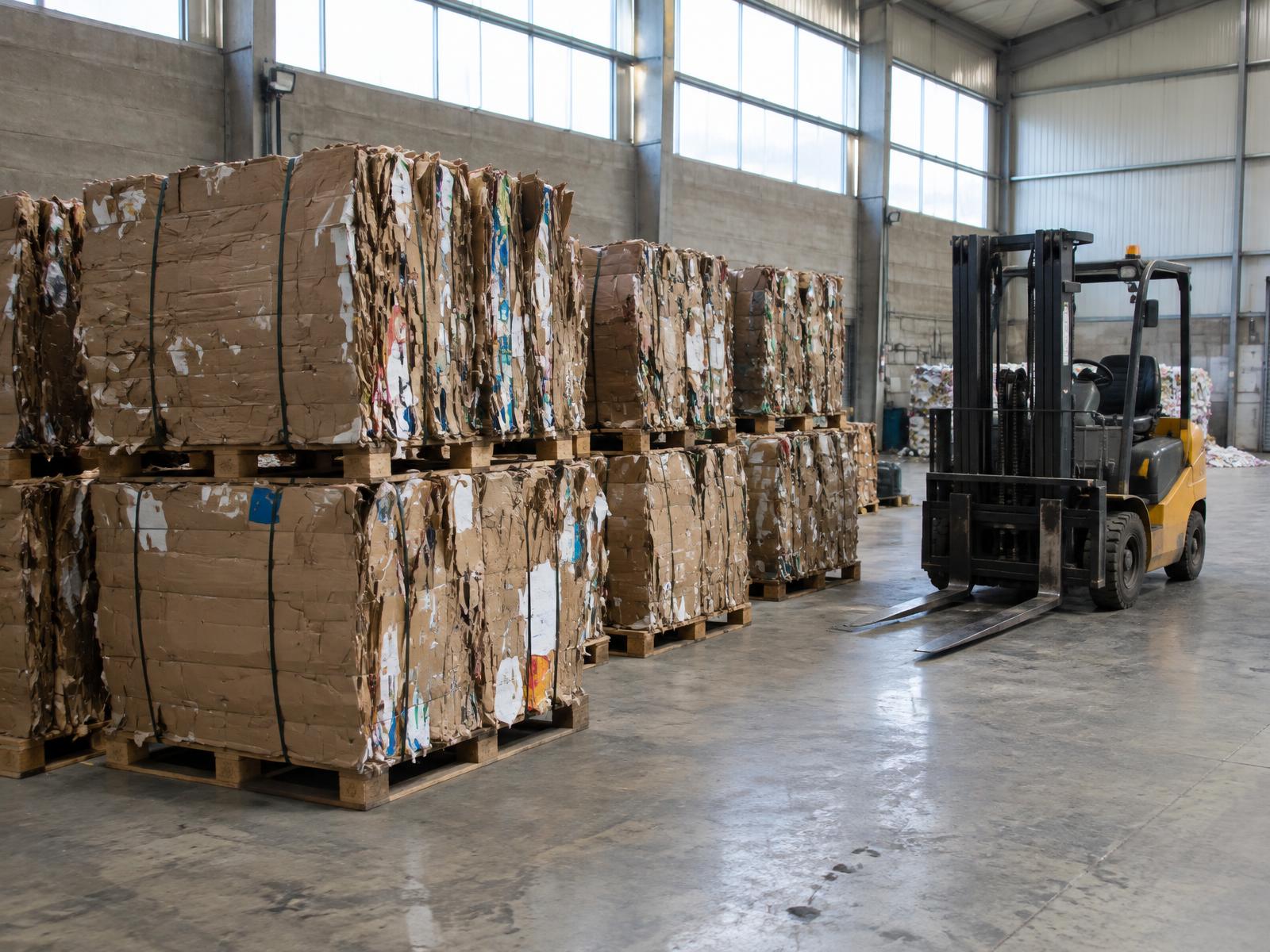
Businesses that handle a lot of cardboard use a baler to compress loose boxes into dense, uniform bales that are easier to store, move and recycle. Understanding the basic principle helps when choosing equipment or arranging collection of bales you already produce.
The Basic Principle
A cardboard baler compresses loose cardboard into a chamber to produce a compact bale. The compression and tying arrangements depend on the machine and must follow its current instructions (Collect & Recycle equipment reference).
Equipment suppliers describe this compression stage using terms such as press force, cycle time and bale weight to indicate how much material a given machine can process and how large each resulting bale will be (Collect & Recycle). Exact figures vary by make and model, so always check a specific manufacturer's current specification sheet rather than assuming figures from one supplier apply to another machine.
Why Businesses Bale Cardboard
Loose cardboard takes up far more space than baled cardboard and is harder to handle safely in a yard or loading bay. Baling turns a large, awkward volume of boxes into compact, stackable units that are simpler to store between collections and quicker to load onto a collection vehicle.
Baling is part of the transport and handling stages described in the DS Smith recycling process. It does not remove the need to assess contamination or bale condition.
Common Baler Categories
Cardboard balers are typically grouped by size and output, often described using terms such as smaller, medium, twin-chamber and mill-size. These categories reflect differences in footprint, throughput and the volume of cardboard a business produces, rather than a single fixed scale from small to large. A twin-chamber baler, for example, describes a chamber configuration rather than a specific position in a size range.
Businesses considering equipment should compare categories against their own volume of cardboard, available space and loading arrangements, using current manufacturer specifications.
What Happens to the Bale Afterwards
Once a bale is formed, it is generally stored on site until collection, then transported to a paper mill or other licensed reprocessing facility, where it is broken down and pulped as part of the recycling process (DS Smith; Smurfit Westrock). How a cardboard bale is recycled after collection is covered in more detail in our guide to how cardboard is recycled.
Choosing and Running a Baler
Selecting the right baler depends on the volume of cardboard produced, available space, and whether the business needs hire, leasing or purchase. Any business starting or reviewing its baling arrangements should work from current manufacturer specifications and training materials for the specific model in use, rather than general guidance, when it comes to day-to-day operation.
If your business already produces cardboard bales of any size, from small to mill-size, and needs them collected, get a collection quote and our team will assess your load individually. If you are weighing up equipment options, visit our cardboard balers hub to compare hire, leasing and purchase routes.
This article is for general information only and does not constitute professional or legal advice. For guidance on your specific waste, please contact our team.